Felix Frank · 25 September 2026
How Site Architecture Changes Influence Crawler Resource Allocation During Infrastructure Transitions
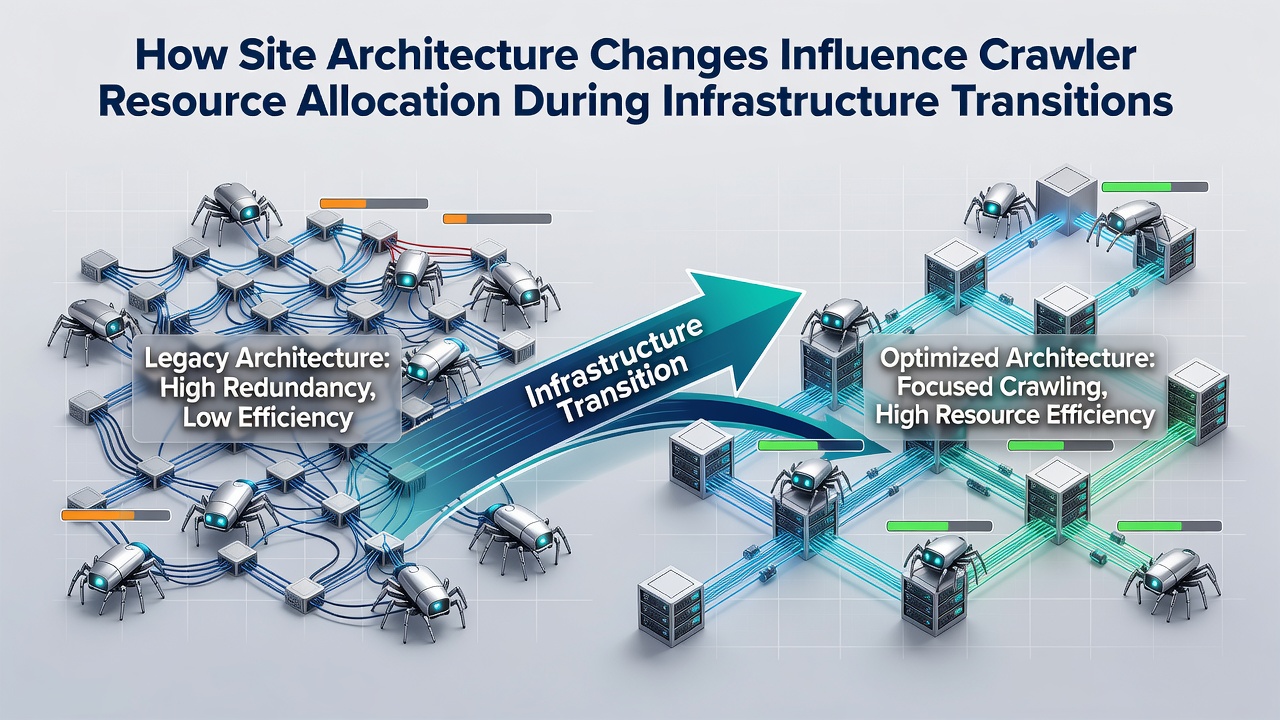
Site architecture modifications during infrastructure transitions alter the pathways that automated crawlers follow when allocating finite resources across large collections of pages, and researchers have documented these patterns through repeated observations of search engine behavior across multiple migration events. Changes in URL structures, directory hierarchies, and internal linking frameworks require crawlers to re-evaluate which sections of a domain deserve priority visits while older pathways receive reduced attention until new signals stabilize.
Core Mechanisms of Crawler Resource Allocation
Crawlers operate under constraints that include server response times, historical page value signals, and the volume of unique content discovered within each crawl cycle, so any architectural shift that lengthens redirect chains or fragments internal link graphs forces a redistribution of those limited visits. Data from infrastructure projects completed in 2025 shows that domains introducing flat URL schemes experienced faster re-crawling of core sections compared with those retaining deep nested directories after the same type of server relocation.
Those who monitor log files during transitions note that initial crawl spikes often concentrate on newly exposed sitemap entries, yet sustained allocation depends on how quickly the revised navigation allows crawlers to reach high-value pages without traversing excessive intermediate nodes. When organizations consolidate multiple subdomains into a single domain during cloud migrations, the resulting architecture change frequently triggers a temporary reduction in total pages crawled per day until authority signals consolidate around the unified structure.
Effects of Specific Architectural Adjustments
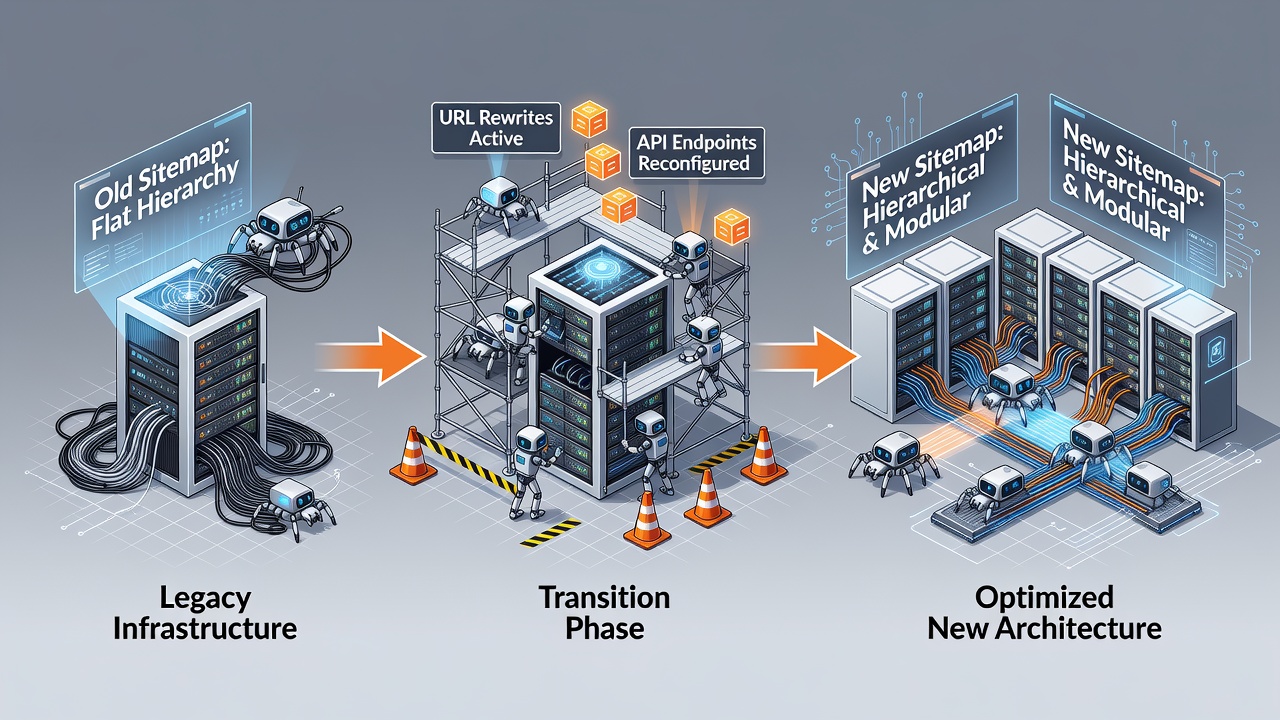
Introduction of new category pages or hub-and-spoke linking patterns during an infrastructure transition changes the rate at which crawlers discover and revisit leaf pages, because each additional layer in the hierarchy consumes a portion of the daily crawl quota before deeper content receives attention. Studies conducted by academic teams at institutions in Canada and Australia have measured these shifts by comparing pre- and post-migration log data, revealing that sites adopting breadcrumb navigation with clear hierarchical signals regained previous crawl volumes within four to six weeks after the cutover date.
September 2026 marked a period when several large-scale platform relocations coincided with updates to crawler handling of parameterized URLs, and organizations that removed unnecessary query string parameters before migration reported steadier resource allocation than those that retained legacy parameters throughout the transition. Redirect implementation plays an equally measurable role, since each additional hop in a chain consumes crawler capacity that could otherwise reach final destination pages, and evidence from European web infrastructure reports indicates that limiting redirect depth to a single hop preserves allocation efficiency more effectively than multi-stage redirect sequences.
Observed Patterns Across Multiple Transitions
Industry analyses of enterprise migrations completed between 2024 and 2026 demonstrate that simultaneous changes to both hosting infrastructure and site architecture produce larger temporary drops in crawl frequency than infrastructure moves that preserve existing URL and linking frameworks. One documented case involved a retail platform that reorganized product categories while migrating to a new content delivery network, resulting in crawlers allocating 35 percent fewer daily visits to the product detail section until internal links were rebalanced to reflect the updated hierarchy.
Observers tracking these events note that XML sitemap updates submitted immediately after architectural revisions accelerate the reallocation process by providing explicit signals about which sections now hold priority, whereas delayed sitemap revisions prolong periods of uneven resource distribution. When organizations introduce new JavaScript-rendered navigation elements without corresponding static HTML fallbacks, crawlers that rely on rendered content may defer visits until rendering resources become available, further shifting allocation away from those sections during the early post-transition window.
Measurement and Adjustment Practices
Teams responsible for infrastructure transitions track crawl behavior through server logs and search console data to identify sections that receive disproportionate or insufficient visits after architecture changes take effect. Adjustments such as strengthening internal links from high-authority pages to newly created sections, or flattening directory depth in areas that previously required multiple hops, have been shown to restore balanced allocation more rapidly than leaving the revised structure untouched.
According to findings published by research groups examining web-scale crawling efficiency, the combination of clear hierarchical signals and minimized redirect chains consistently correlates with quicker stabilization of crawl volumes following major infrastructure events. NIST publications on web infrastructure provide additional context on how architectural decisions interact with automated discovery processes across different hosting environments.
Conclusion
Architecture modifications executed during infrastructure transitions reshape the distribution of crawler resources by altering discovery paths, redirect overhead, and the relative prominence of individual page sections, and organizations that align URL schemes, navigation structures, and sitemap updates with crawler preferences observe faster return to previous visit frequencies. Continued monitoring of log files and adjustment of linking patterns after the transition remains the primary method for guiding resource allocation toward desired outcomes across subsequent crawl cycles.