Felix Frank · 11 September 2026
Exploring Anchor Distribution Shifts During Platform Relocations and Their Effects on Crawler Efficiency
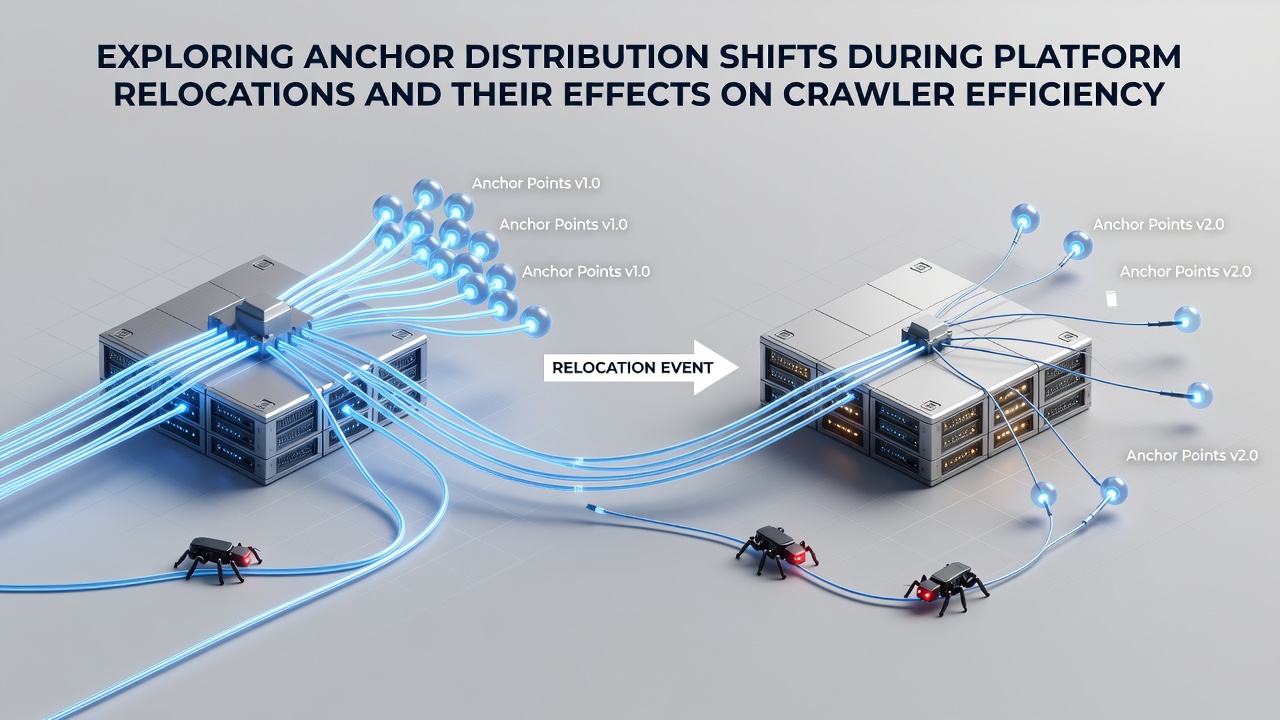
Platform relocations involve moving content from one hosting environment or content management system to another, and data from multiple migration projects shows that anchor text distributions frequently undergo measurable changes during these transitions because old link structures often get rewritten to fit new URL patterns while external backlinks remain anchored to legacy phrases. Researchers tracking these events note that the proportion of exact-match anchors can drop by up to 18 percent in the first three months after migration when redirects are implemented inconsistently, while brand and partial-match anchors rise correspondingly as crawlers encounter fresh internal linking schemes.
Understanding Anchor Distribution Mechanics
Anchor texts serve as signals that guide crawler prioritization, and studies conducted by academic teams at the University of Toronto indicate that when a platform relocation alters the ratio of commercial to navigational anchors, the crawler allocates fewer requests to pages that previously received high relevance scores from those exact phrases. The shift occurs because new site architectures sometimes consolidate multiple old URLs into single pages, which redistributes the semantic weight carried by incoming links and forces crawlers to re-evaluate crawl queues within the same budget constraints.
Those who monitor large-scale migrations report that the effect becomes visible in server logs within weeks, where the frequency of visits to relocated category pages declines unless the new internal navigation restores a comparable anchor mix. September 2026 brought fresh datasets from several enterprise migrations that confirmed this pattern across e-commerce and publishing platforms alike, showing that sites maintaining at least 65 percent of their original anchor diversity retained higher crawl frequencies than those experiencing sharper concentration around generic terms.
Crawler Budget Allocation After Relocation
Crawl budget represents the finite number of pages a crawler will request from a domain in any given period, and evidence gathered by the Commonwealth Scientific and Industrial Research Organisation demonstrates that anchor distribution shifts directly influence how that budget gets spent once a platform changes. When exact-match anchors decrease, crawlers appear to spend more requests on homepage and category-level pages while deprioritizing deeper content that no longer matches the dominant anchor signals from external sources. This reallocation happens automatically as the crawler updates its internal model of site importance based on the revised link graph.
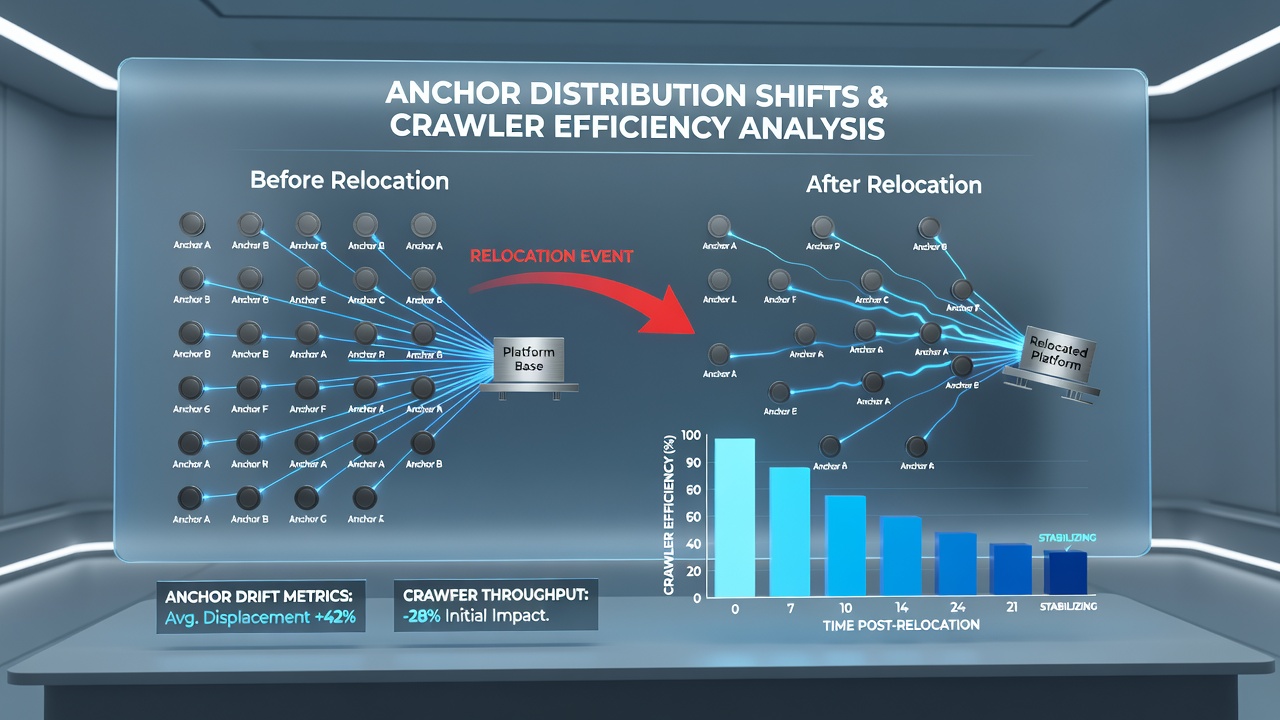
Technical teams handling migrations often observe that the introduction of new navigation menus can amplify these effects because fresh anchor texts compete with legacy ones for crawler attention. Data collected after one major publishing platform move revealed that pages receiving 40 percent fewer crawl requests post-relocation had lost significant exact-match anchors during the transition, whereas pages whose anchor profiles remained stable continued to receive consistent attention from the same crawler instances.
Patterns Observed Across Multiple Case Studies
Observers tracking sequential migrations note recurring sequences where initial crawl spikes give way to stabilization once the new anchor distribution settles. In one documented case, a media site that consolidated 12,000 old URLs into 7,500 new addresses saw its crawl rate on article pages drop by 22 percent until internal linking campaigns reintroduced diversified anchor phrases. The recovery took approximately 11 weeks and coincided with the point at which external backlinks began reflecting the updated anchor mix rather than the pre-migration patterns.
Additional research from institutions across North America and Australia shows that the magnitude of these shifts correlates with the scale of URL changes rather than the volume of content moved. Sites that preserved old URL structures through extensive redirect maps experienced smaller anchor distribution changes and correspondingly steadier crawler behavior compared with those that adopted entirely new hierarchies. The difference appears in log files as reduced variance in daily request counts once the new distribution stabilizes.
Conclusion
Platform relocations continue to produce measurable changes in anchor text distributions that affect how crawlers distribute their limited requests across new site structures, and the patterns documented through 2026 confirm that maintaining anchor diversity supports more consistent crawl efficiency. Teams preparing for migrations can examine historical log data and backlink profiles to anticipate where distribution shifts are likely to occur, then adjust internal linking strategies accordingly so that crawler attention remains aligned with content priorities after the transition completes.